How much does website design cost in Melbourne?

A straightforward website can cost less than $5,000. When we asked web agencies to recommend and price more extensive projects, the figures ran from roughly $5,000 to over $100,000. Those prices covered very different work: a small site, design without development, a brand-and-website project or a larger design-and-build engagement.
That's a difficult range to budget around. Two agencies can say “custom website” and mean different research, writing, technology and responsibilities. Before deciding which price makes sense, you need to know what each one buys.
Below, we compare the work behind real agency prices and explain how to decide what your business needs. A larger website is worth paying for when you have a reason to use it.
What different agency prices actually buy
We build websites at SOL STUDIOS. For this comparison, we ran a mystery-shopping study of web agencies, looking at their recommendations, written quotes and what each price included.
The examples include Melbourne agencies and interstate studios. All prices are in Australian dollars and were received in July and August 2026. They describe proposed work, rather than delivered results or a Melbourne market average, and are not current quotes.
Read the work and exclusions alongside each price. They explain much of the difference between the totals.
| Agency | Website-related price received | Work described | What to keep separate |
|---|---|---|---|
| Social Space | $549–$799 setup, including GST; Core subscription $55 a month, including GST | A theme-led Duda website with hosting, platform updates and selected support through the subscription | Content was listed separately at $500, including GST. The commercial summary said revisions were not included. The setup fee was not the full ongoing cost. |
| Confetti Design | $5,830, including GST | A small-business WordPress website built with the Elementor Pro page builder, including design, a discovery workshop, content writing/uploading and launch work | Hosting was $40 a month excluding GST. The proposal identified an Elementor Pro licence as a client expense. Ongoing search work was separate. |
| Seriously Good Design | About $7,000, excluding GST | A custom WordPress website | Optional copywriting was a further $3,500 excluding GST. This was a sales recap and indicative price, not a final project proposal. |
| Impressive Digital | $7,500, excluding GST | A WordPress website. Copywriting and a tone-of-voice workshop were discussed as included on the call. | The written website schedule specified implementation of supplied content, so the copy allowance needed confirming. Optional hosting was $99 a month excluding GST; wider marketing services were priced separately. |
| Ven Agency | $14,400, excluding GST | Discovery and strategy, website structure and visual design, a custom WordPress build, search and launch preparation, testing and analytics setup | Hosting and maintenance had separate monthly prices. Ongoing SEO and paid media were additional services. |
| Studio Sondar, Adelaide | $14,800 for the core brand-and-website work, excluding GST | Brand strategy and identity, a content plan, and custom Webflow design and development | The core price was not for a website alone. Optional copy and enquiry-capture/follow-up work brought the presented total to $19,000 excluding GST. The Webflow site plan was paid separately. |
| Studio Brave | $25,000–$35,000 for website design, plus a 20% project-management charge; GST basis unconfirmed in the retained record | Premium website design within a brand-led studio engagement | Development and rollout were unquoted. This was a ballpark, not a price for a finished, launched website or a formal fixed proposal. |
| Universal Favourite, Sydney | $71,800–$111,300, excluding GST; $78,980–$122,430, including GST | Website layout planning, interface design and a separately itemised build estimate | Brand development was priced separately. The build estimate ranged from a custom-configured/coded Webflow site to a custom content management system. |
Several of these offers could reasonably suit the right buyer. Social Space advised against unnecessary premium scope and premature monthly SEO. Studio Sondar carried the buyer's audience and positioning decisions into a combined brand-and-web proposal. Universal Favourite made the design and build allowances visible as separate parts of its estimate.
Why two website quotes can be so far apart
Before deciding whether a quote is expensive, check what it covers. A lower total can reflect a smaller project, including work you'll need to arrange separately.
Design and development may be separate
Website design determines what visitors see and how they move through it. Development makes that design work, including the editing system, forms, integrations and layouts for different screen sizes.
Some agencies handle both. Others lead the design and work with a development partner. Either arrangement can work, but the build needs a price before you have a budget for a finished website.
Studio Brave's ballpark illustrates this directly. The $25,000–$35,000 figure covered website design, with project management added and development still unquoted. Universal Favourite's larger website estimate included separate allowances for page layout planning, interface design and build. They were different commitments, not simply two rates for a website.
Ask whether the fee takes you all the way to launch. If part of the work is still unpriced, find out who will quote it and when.
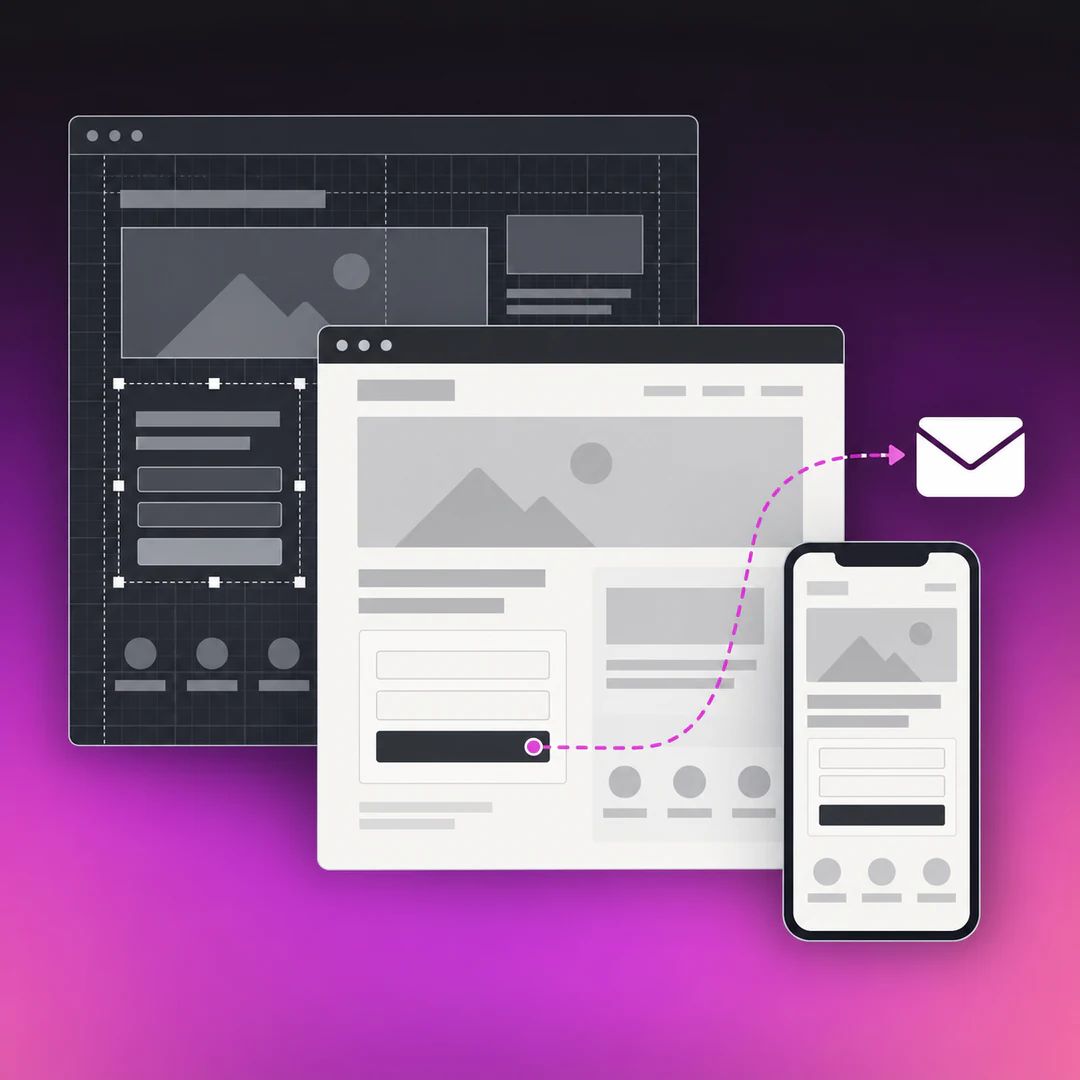
The business may need work before the website can be designed
If your services, audience and offer are clear, the agency can focus on presenting them well.
If they aren't, someone needs to work through those decisions. Which customers are you trying to attract? Why would they choose you? Does the current brand still fit? Studio Sondar's core proposal included brand strategy and identity as well as the website, so its total cannot be compared fairly with a website-only fee.
Ask what the proposed research or workshop will help you decide. Separate residential and commercial audiences, for example, may need different pages, project examples and enquiry paths. “Strategy included” sounds reassuring, but you still need to know what it changes in the website.
If your brand and offer are already doing their job, ask why a wider brand project is being recommended. If they are unclear, cutting that work from the quote leaves the designer to build around the same unresolved questions.
Content can be included, supplied by you, or priced separately
Someone has to write the website. Service descriptions, project explanations and the reasons a customer should choose you all need to come from somewhere.
In the Seriously Good Design recap, the website was about $7,000 excluding GST and copywriting was an optional $3,500 excluding GST. Selecting both would put those two items at roughly $10,500 excluding GST. That is a very different comparison from treating the website as a complete $7,000 package.
At SOL, we include copywriting for the agreed website pages in the project quote. Explaining your offer is part of building the website. We write from your business information and feedback, so the words and design are worked through together.
If another quote asks you to supply the copy, find out how finished it needs to be. Rough business notes and text ready to upload are very different requests. Check who edits the words when the page structure changes, and who chooses and prepares the images.
A cheaper quote can make sense if you have the time and skill to handle that work. Decide before you're handed an empty page and a request for “final copy”.
Page count does not describe the whole build
Ten service pages using one well-designed layout are different from ten pages with their own interactions, calculators or paths for different customers. Even a single booking page might need to check availability, take payment and update another system. Counting it as one page tells you little about the work involved.
The same applies to ecommerce. A small catalogue with standard delivery rules is a different build from a store with complex product options, subscriptions, migration or fulfilment requirements.
Look for the actual pages, reusable layouts and functions in the proposal. Once those are named, you can check whether the agency has allowed for the work you need.
Testing, migration and handover need real allowances
You may also be paying to move existing content, preserve important URLs and test the site on different screen sizes. Those jobs are easy to overlook in a design presentation. The enquiry form deserves a test of its own: send a message and check it reaches the right person.
Ven's proposal separated discovery, design, development, search/launch preparation and quality checks into priced stages. That made the proposed allocation easier to inspect than one unexplained total.
For your project, confirm what will be migrated and tested, who handles launch and what happens if the agreed work has a fault afterwards. If staff will add case studies or edit products, they need the right editing access and a handover that shows them how to use it.
How much should your business spend?
We start with what you need the website to do. “We want something better” is a reasonable starting point, but it doesn't tell us what deserves the budget.
A simple presence may be enough
An established business may already earn through referrals, existing relationships or another channel. Its website needs to confirm what it does, show that it's credible and make the contact details easy to find. There may be no immediate plan to turn it into a substantial source of new work.
A new business may need the same basic presence while it tests its offer and gets operating. In these situations, we often recommend considering a template, an AI-assisted builder or a focused lower-cost package before custom work. Getting the business off the ground is enough of a project already.
Can a simpler site present accurate information, useful proof and an easy next step while meeting the requirements you already know about? If it can, you may have little reason to spend more for now.
Allow for your own time, too. A low build fee still leaves you with service descriptions to write and photographs to collect unless someone has included that work.
A site that supports enquiries needs more considered work
If you're investing in SEO, Google Ads, social media or another way of attracting customers, the website needs to help turn that attention into an enquiry. Visitors need to understand the offer, find evidence that matters to them and know what to do next.
That might mean separate paths for residential and commercial customers, service pages that answer different buying concerns, or project examples organised around the work you want more of. The enquiry form should collect useful information without making contact a chore.
Custom work is worth considering when a simpler option gets in the way of requirements you've already identified. Pay for the research, writing, design and build needed to meet those requirements. Running ads or SEO doesn't, on its own, make a template unsuitable.
If customers keep asking whether you take on a particular type of work, clearer service information and relevant project examples may help. A new visual design still needs to answer that buying question.
An operational website needs a budget for its capabilities
A larger business may need staff to publish content, customers to book or log in, or a store to connect with stock, payments and fulfilment. The website becomes something people use to get work done.
That brings decisions about who can edit what, where data goes, how systems connect and what happens when something fails. Those requirements can justify a larger budget. The proposal should name the capabilities you're paying for.
Separate what you need at launch from what can follow. You can need a custom site now and still leave some integrations for later.
Keep enough budget to use the website
The website budget has to leave room for the rest of the business. Spending everything on the build does not make the photography or marketing suddenly free. Allow for the content, promotion and follow-up needed to use the site, as well as the site itself.
Write down the problem you're trying to solve. Is the business difficult to understand online? Is important work missing from the portfolio? Are customers finding the wrong service or struggling to enquire? Does the team need to manage information the current site can't handle?
Ask the agency to explain how its recommendation addresses those problems. You can then judge what the extra work is worth, rather than picking a percentage of revenue or assuming the most expensive option will perform best. A custom website is not a guarantee of rankings, enquiries or sales.
If the website is part of a wider repositioning, use our website-cost guide for established businesses alongside this comparison.
Compare two quotes against the same requirements
Give both agencies the same short description of your business, customers, required website and available content. Otherwise, they may be quoting different projects before you've even started comparing prices.
Use this sheet to record the answers. Mark each item as included, optional, your responsibility or still unpriced. If a proposal doesn't mention something, ask. An omission alone doesn't tell you whether the agency will provide it.
| Item | What to confirm in each quote |
|---|---|
| Finished deliverable | Design only, design and development, or a wider brand-and-web project? Does the fee reach launch? |
| Research and decisions | Which business, audience or website decisions will be worked through? What will that change in the delivered site? |
| Pages and functions | Which pages and reusable layouts are included? Are bookings, payments, forms, integrations and migration specified where needed? |
| Copy and media | Who supplies the information? Who writes the finished copy and prepares images? What remains for you to produce? |
| Review and changes | Which revision rounds are included, who approves them, and how is additional work priced? |
| Launch and correction | What is tested, who launches, and what is the correction period for faults within the delivered work? |
| Access and handover | What can you edit, which accounts do you control, and what happens if another provider takes over? |
| Money | GST basis, required third-party costs, payment milestones and any mandatory ongoing commitment? |
Agencies don't need identical methods. They do need to make the differences clear enough for you to decide what matters to your business.
If one quote includes copy and another expects you to supply it, get the second agency's copy price before comparing totals. If a quote includes a brand identity you don't need, ask for its website-only recommendation. Where development is unpriced, get an estimate before treating the total as the cost of a finished website.
Put GST on the same basis, too. A price of $10,000 excluding GST is $11,000 including GST. You don't want the tax treatment deciding which quote looks cheaper.
Keep ongoing costs visible from the start
Alongside the build, find out what you'll pay to run and change the website. Keep these costs separate:
- Running the site: domain, hosting or platform plan, paid licences and other required services.
- Technical upkeep: the checks, updates, backups and fixes someone is responsible for after launch.
- New work: adding services, pages, products, features or integrations outside the original project.
- Marketing: ongoing SEO, paid advertising, content and campaign work, where you choose them.
- Changing providers: any transfer fee or work needed to move the site, data or accounts.
Some may be bundled, some optional and some left for you to arrange. Ask which is which, and what changes when an introductory or included period ends.
Social Space's low setup price came with a website subscription. Confetti listed hosting and a client-paid plugin licence separately. Studio Sondar directed the client to pay the Webflow plan directly. Each leaves a different ongoing bill and responsibility.
An ongoing fee can be perfectly reasonable. You need to know what it covers, whether it's required and who takes responsibility if you decline it. Get those answers alongside the build price.
What to ask for before accepting a website quote
Before signing, you should be able to explain what you're buying, what you still need to provide and what you'll be able to do with the site afterwards.
If the proposal leaves that unclear, you can send this:
Please confirm the total design-and-build price, its GST basis, and any required third-party or ongoing costs. Please also list what we need to supply and anything needed for launch that is not included. We want to compare a finished website with a finished website, rather than leave part of the work unpriced.
Once the scope is clear, ask why the agency recommends that level of work for your business. You should be able to recognise your customers, offer and requirements in the answer.
That may confirm a larger investment or show that a simpler site would do the job. Either way, you'll know what you're paying for and why.
Discuss your website
Tell us what you want the website to help your business achieve, what the current site does well and where it falls short. We can work through the requirements and discuss an appropriate direction before you commit to a build.
See how we approach web design, or discuss your website with SOL.

SOL STUDIOS is Australia's leading design and digital systems studio for established businesses.
Contact Us

