How to choose a web designer

Choose a web designer who can connect what they learn about your business to the website they recommend. Then check that the proposal reflects those decisions.
In our July 2026 agency research, Studio Sondar carried a discussion about different customer groups into separate content and enquiry paths. The proposal made that distinction part of the work. Look for the same connection between what a provider learns and what you're being asked to buy.
A portfolio helps you decide whether you like someone's work. This guide helps you decide whether you trust their recommendation for yours.
Start with what your website needs to do
Before you compare web designers, describe the reason you're considering a new website. “Ours looks dated” is a reasonable starting point. What happens because it looks dated?
Perhaps referred customers hesitate after visiting it. Perhaps it attracts enquiries for work you no longer want. Or perhaps your team can't update a service without calling the developer.
Those problems can lead to quite different projects. Getting the job clear first makes it easier to recognise a suitable recommendation and question an unnecessary one.
A credible place to check your business
Some websites mainly reassure people who already know about the business. Visitors need to confirm what you do, where you work, whether you're credible and how to contact you.
If that is the job, a well-chosen template or AI website builder may be sufficient. It still needs accurate information, sensible navigation and a usable mobile experience. A custom build needs an additional reason to justify the extra work.
This can be a sensible first step for a new business, or enough for an established business that earns through referrals and has no immediate acquisition plans. Business age alone doesn't decide it.
A website that helps win customers
The requirements change when visitors arrive without knowing you. They may be comparing several providers, questioning the price or deciding whether you understand their problem.
The website then needs to explain the offer, address relevant doubts, show useful proof and make the next step clear. If you plan to invest in SEO or advertising, the designer should understand who that activity will bring to the site and what those people need before enquiring.
That does not make every marketing website a custom-build project. It gives you specific requirements to test against the options. Ask what a template could handle, where it would need adaptation and what custom work would add.
A website your business operates through
For some businesses, the website also supports regular work: publishing a large service library, managing products, taking bookings or connecting with another system.
Here, the buying decision includes who updates the information, which tasks the site must support and what happens when requirements change. A polished homepage will not tell you whether those tasks are covered.
Write down the actual tasks. “Our team needs to add a new service page without a developer” is more useful than “We need something scalable”. Portals, integrations and other functions need to be named in the scope, not assumed from that word.
You may need more than one of these jobs. Put them in order. A provider should be able to explain how the recommended work addresses the priorities, including what can wait.
The guide to custom websites, templates and AI builders examines those routes in more detail. Here, the question is which provider can help you make the choice properly.
Make a shortlist from relevant work and responsibilities
You don't need to send your brief to every agency in Melbourne. Start with a small shortlist whose work and delivery model plausibly fit what you need.
A freelancer can be a good fit for a focused project. A studio or agency may suit work requiring several disciplines. The label tells you less than the people, responsibilities and actual scope behind it.
Web design usually concerns how the site is organised, presented and used. Web development concerns building that experience and its functionality. Some providers do both; others work with specialists. Establish what you are commissioning and who will deliver each part.
Look beyond the portfolio thumbnail
Open a relevant project on your phone. Try finding a service, understanding who it is for and reaching the next step. If content editing matters, ask to see how the client manages it.
Then ask what the provider actually did. A portfolio entry might cover the identity, the design, the build or the whole project. It may also contain work delivered with another team.
Industry experience can help, but a project with a similar buying decision may be more informative. A business selling a complex service has different communication needs from one selling a straightforward product, even if both are in your sector.
Look for evidence relevant to your concern. If the site must help visitors assess a high-consideration purchase, inspect how the work explains that offer. If regular publishing is important, ask about the content system and the client's editing experience.
Keep the limits of the evidence in mind. An attractive live site demonstrates something about design and execution. It does not establish how much revenue the website generated. If a case study reports a commercial improvement, ask what changed, over what period and what other activity was involved.
Use reviews to investigate the working relationship
Reviews can help you assess communication, follow-through and how the provider handles problems. Read what the client actually describes, rather than treating the star count as the whole answer.
A useful reference conversation concerns work similar to yours: what the client needed to supply, how decisions were made and what happened after launch. You are looking for enough evidence to test your particular concern, not another round of compliments.
The best web design agencies in Melbourne guide provides a starting shortlist by business need. Treat it as a way into the comparison, not a substitute for checking your own fit.
See whether the conversation changes the recommendation
A good presentation can explain the agency's process and previous work. You still need to know what the provider has understood about your business.
Our review of 18 selected buying journeys found concerns spanning trust after a poor experience, uncertain costs, control after handover and accountability across connected work. These came from our client and sales records, not a representative market survey.
Use your own concern to guide the next conversation. If the last provider left you dependent on them for every edit, ask to see the proposed editing setup. If the old site attracts the wrong enquiries, ask what the new recommendation changes for the customers you want. A reassuring account of the agency's process should lead to an answer about your problem.
In our agency research, we looked for the next step: whether questions and follow-ups shaped a recommendation and reached the written proposal.
What that looked like in practice
Studio Sondar's July 2026 conversation explored the current and desired audience mix. Its proposal carried that distinction into separate content paths and audience-specific enquiry forms.
That made the recommendation concrete. Different visitors would be able to follow relevant information and make an enquiry through a path intended for them. The discussion had reached a stated part of the build, rather than remaining a general description of the audience.
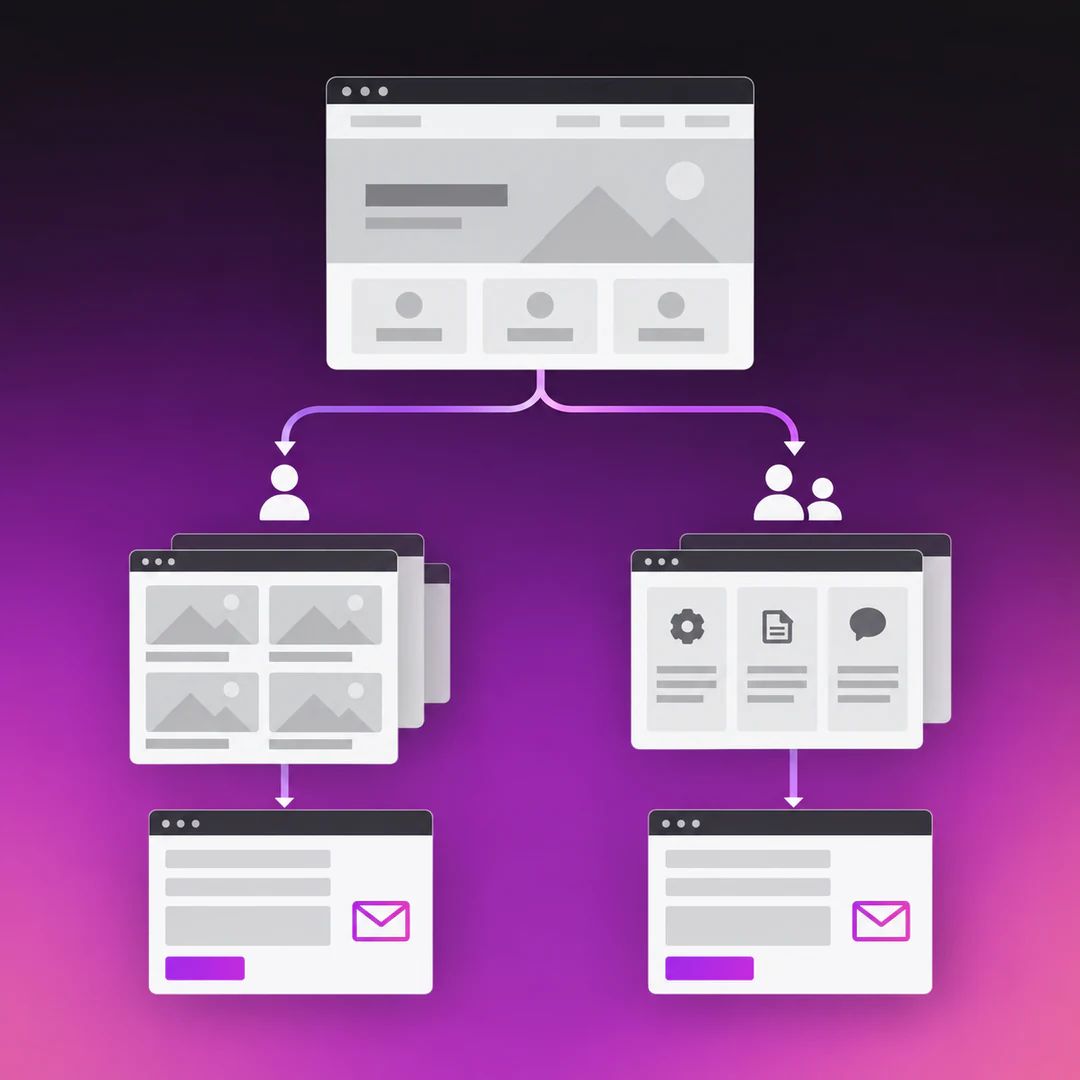
You can test the same connection with a shortlisted provider. Choose one important part of your brief, such as a customer group you want more work from. Ask how that information affected the recommendation. Then look for the relevant pages, content or functionality in the proposal.
If the answer doesn't affect the work, it may still have been useful background. It hasn't yet shown why this particular website is the right purchase.
Our mystery-shopping research compared sales conversations and written proposals before signing. We did not test the performance of websites later delivered. The Sondar example shows visible reasoning, not a delivered result.
Leave room for proper discovery
An initial call cannot resolve every design, content or technical decision. Some projects need paid discovery before the build can be scoped responsibly.
In that case, establish what discovery will decide and how it affects the next commitment. Will it clarify the audiences, page structure, integration requirements or build approach? Could it lead to a smaller project or a different sequence?
You don't need to demand a complete strategy for free. You need to understand which decisions have been made, which remain open and whether the price you are considering covers discovery, the build or both.
The questions to ask a web developer checklist takes you through the detailed first-call and before-signing questions.
A recommendation should allow for less work
At SOL STUDIOS, we would consider a simpler route when the business mainly needs a credible presence and has no clear reason or capacity to pursue more. An owner should be able to understand why a larger investment would be useful before making it.
The presence, customer-acquisition and operational jobs above give you a starting point. Ask which requirements justify the proposed investment, which can use an existing approach and which can wait. A custom site does not automatically convert better, and a cheaper route is not automatically sufficient.
Timing belongs in the same discussion. If you cannot supply the information, review the work or handle the enquiries you hope to generate, a smaller scope or later start may be sensible.
Ask the provider to explain what they would defer and what would make it worth revisiting. A convincing reason for spending less now can help you understand where spending more later would matter.
Know who carries the decisions across the project
Several concerns in our selected buyer journeys centred on one accountable relationship and keeping context across connected work. The practical question is who remembers why a decision was made when the project moves from discussion to design, content and build.
That person does not need to perform every task. A studio can coordinate specialist designers, developers or writers. A freelancer may work with another provider. Either can be sensible if responsibilities are clear.
Establish who holds the brief, resolves conflicting advice and tells you when a request changes the agreed work. If you introduce another specialist, who coordinates the handover?
For example, the pages chosen during discovery should remain connected to the intended audience when the copy is written. The developer also needs to understand any enquiry logic those pages depend on. Otherwise, you can end up repeating the reasoning between people who are each delivering their part correctly.
This is different from buying every service from one agency. A longer service list doesn't show who is responsible for the decisions between those services. Equally, using an external specialist doesn't show that responsibility is missing.
If you are comparing local, offshore or mixed teams, make the people and responsibilities explicit. Location can affect meeting arrangements and working hours. It does not, by itself, establish design quality or business understanding. The guide to local and offshore web developers examines the operating models in detail.
Compare the proposed engagement, not just the total
By proposal stage, you should be able to connect the recommended work to the job you described. Use the following comparison to identify what is clear and what needs another conversation.
| Decision | What to look for in the recommendation or proposal | What an unresolved answer means |
|---|---|---|
| Why this website? | The business need, intended visitors and proposed response agree | Clarify the direction before treating the page list as the solution |
| What are we buying? | Design, build, content, functions and client responsibilities are distinguishable | Establish the finished work and exclusions before comparing prices |
| Who is responsible? | The delivery roles, decision owner and communication route are named | Resolve who coordinates the project, including any specialist handovers |
| How will it be used? | Relevant visitor actions, editing tasks and technical requirements are covered | Ask for the important task to be explained or demonstrated |
| What happens afterwards? | Access, handover, support, ongoing work and charges are clear | Compare the continuing relationship and ability to change provider |
You don't need identical proposals. You need to understand the differences well enough to choose between them.
Understand what the price takes you through to
Check whether the quoted engagement ends with a design, a working website or a website with the agreed content entered and tested. These are different purchases.
Copy is worth establishing early. Does the provider write it from your business information, refine what you supply or expect finished text? A site can be beautifully designed and still be waiting on you to write every page.
For our scoped website work, SOL STUDIOS includes written website copy for the stated pages, using your information and feedback. Bulk, specialist or technical content needs its own stated allowance. Compare the work and client effort behind an inclusion, rather than assuming the word “copy” means the same thing in every quote.
Check what can change the price, what you need to provide and when payments fall due. If a part cannot yet be priced, ask how it will be resolved before the work proceeds.
The guide to web design costs in Melbourne compares documented engagements and explains what makes their prices unlike. Use that deeper comparison when the totals look difficult to reconcile.
Check how the timeline depends on you
A project duration is more useful when you know what starts it and what can hold it up. Confirm when the provider can begin, what information is needed and how feedback is handled.
If you have a fixed launch date, discuss it before selecting a provider. Find out what needs to be ready and what happens if a required decision or piece of content is delayed.
The purpose is to agree on a workable schedule with clear responsibilities. A short headline turnaround tells you little without those conditions.
Distinguish a finished build from ongoing improvement
If enquiries or sales matter, establish which useful visitor actions the website is meant to support. Then ask what will be set up to observe those actions.
Tracking alone is not an ongoing improvement service. If you are buying optimisation as well, establish who reviews the evidence and what work is funded to respond. If you are buying only the build, make the handover clear so you can arrange that next step separately.
Ask about mobile use, accessibility, forms and performance as part of the actual delivery. The provider should be able to explain the agreed standard and how it will check the work. Do not assume that “SEO-ready” includes a continuing SEO campaign or a ranking promise.
Understand control and support before signing
Make sure you know which accounts you will control, what your team can edit and what transfers if you move to another provider. Domain access, content, design files, code and third-party licences are different things. “You own the website” does not settle every one of them.
The who owns your website? guide separates those assets and the practical handover questions. What you receive depends on the written agreement; check the actual terms rather than relying on a broad assurance.
Support also needs a defined endpoint. Confirm what is covered immediately after launch, which services continue and what later changes cost. The guide to website maintenance costs in Australia examines the ongoing obligations and responsibilities.
Use the next conversation to close the remaining gaps
Once you have a shortlist, give each provider the same useful starting information: why the website needs to change, the visitors it must serve and any known budget or timing constraints. Include relevant current-site problems and examples of customer questions.
You do not need to write a finished technical brief. Leave room for the provider to question the proposed approach.
After the call, compare what each recommendation has resolved. What have they understood? What would they build? What would they defer? Which decisions remain for discovery?
Before signing, bring the recommendation and written proposal together. If important reasoning is missing from the scope, ask for it to be made clear. If the terms contradict the conversation, ask for a corrected proposal rather than trying to decide which version will apply.
Choose when the direction, evidence, responsibilities and commitment make sense together. Further discussion may be needed if a proposal leaves a material decision open. You can also decide that none of the current options is the right fit.
If two providers meet those checks, return to the priorities you set at the start. Separate essential requirements from preferences. Ask what the price difference buys for those requirements and what you would give up by choosing the other option.
For example, a higher quote may include writing the pages and entering the content, while a lower quote leaves that work to you. If you have the time and capability, that may be a reasonable trade. If you don't, it changes which proposal is practical. Apply the same comparison to design quality, specialist functions and ongoing support, without assuming the highest price is the best answer.
Take the next decision in more detail
Use the guide that matches what is still unresolved:
- Questions to ask a web developer: prepare for the call and check the written commitments.
- Who owns your website? Understand control, licences and what happens when you leave.
- Web design costs in Melbourne: compare the work behind different prices and decide what your business needs to spend.
- Local and offshore web developers: establish delivery responsibilities and the coordination expected of you.
- Custom websites, templates and AI builders: choose the build route from your actual requirements.
- Website maintenance costs in Australia: understand the ongoing costs, work and support relationship.
- Best web design agencies in Melbourne: build a shortlist by business need.
Discuss your website with SOL STUDIOS
Our web design work starts with the business, intended audience and requirements before the design decisions. For work that also needs a build, those decisions inform the scoped web development.
If that approach fits what you need, discuss your website with us. Tell us what needs to change, and we'll work through the appropriate next step.

SOL STUDIOS is Australia's leading design and digital systems studio for established businesses.
Contact Us


